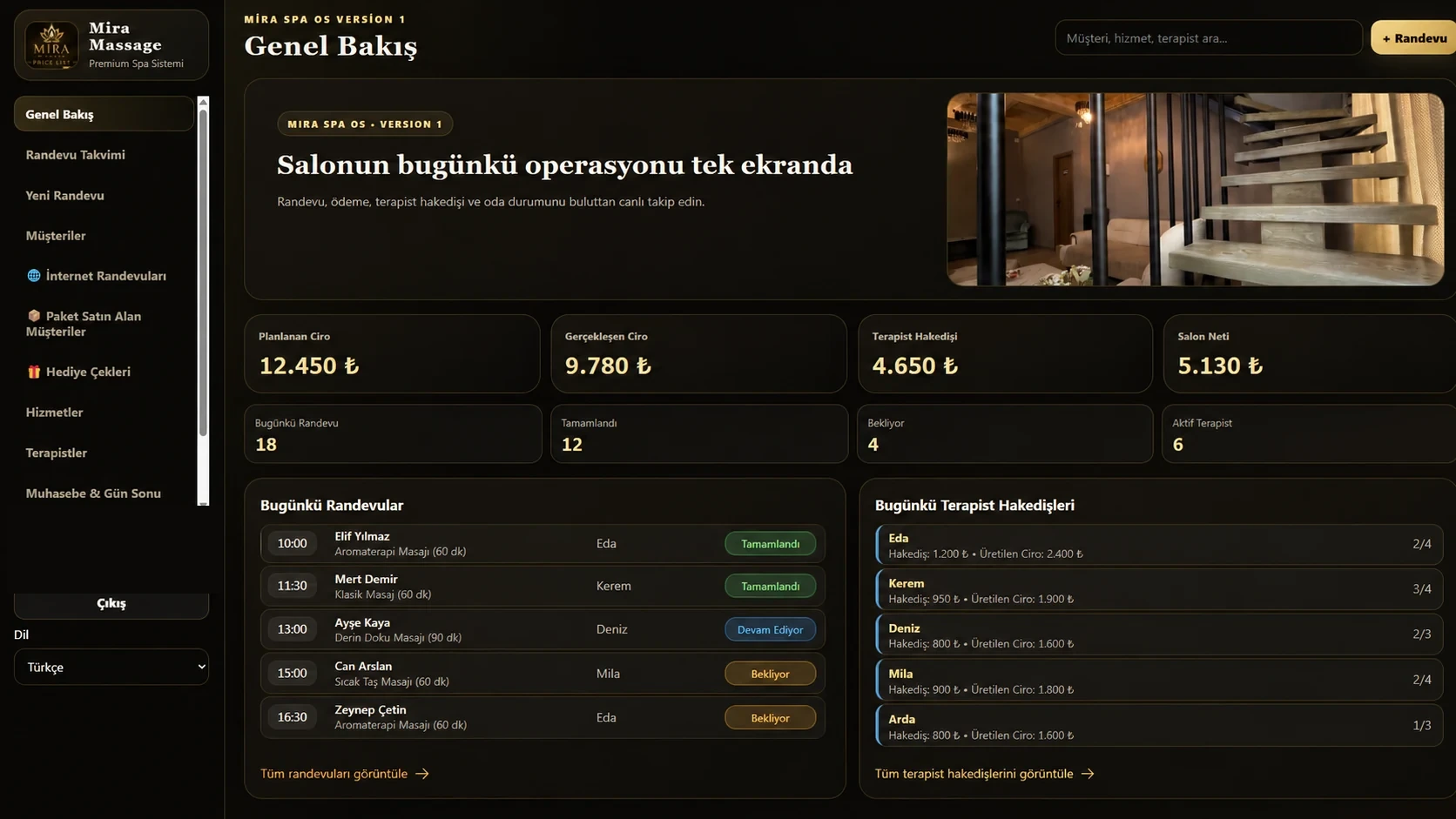
One operational view
The dashboard gives owners and managers a quick view of the day: appointments, completed sessions, therapist activity, package usage and financial indicators. The objective is not to create more charts. It is to reduce the number of places a manager must check before understanding what is happening in the business.
Appointments and internal scheduling
The appointment calendar is designed for internal control. Rooms, therapists, service duration and appointment status can be managed in a structured flow. Because Revluno does not force public online booking into the base product, businesses can keep customer acquisition on WhatsApp, phone or their preferred channel while still running an organized internal schedule.
CRM, packages and repeat business
Customer records, session packages, remaining usage and gift vouchers can be tracked in the same system. This matters for wellness businesses because revenue is often created across several visits rather than a single transaction. Package logic is designed to prevent double-counting while keeping therapist entitlement and cash records understandable.
Therapist and commission control
Commission rules can be modeled around the operating policy of the business rather than forcing the business into a generic template. Management can review completed work, generated revenue and therapist entitlement with clearer traceability.
Finance and day-end
Service revenue, other income, therapist costs, manual expenses, cash/card/transfer breakdowns and day-end counts can be reviewed together. The system is intended as an operational management layer, not a replacement for statutory accounting software or professional accounting advice.
Reporting for decisions
Management reporting can show service performance, therapist performance, busy hours, daily turnover and period comparisons. Reports are useful only when the underlying operational data is consistently entered, so the system is designed around repeatable daily workflows.